
The White Tiger by Aravind Adiga- A Review

Book title: The White Tiger
Book Author: Aravind Adiga
Publication Date: April 22, 2008
ISBN: 1-416-56259-1
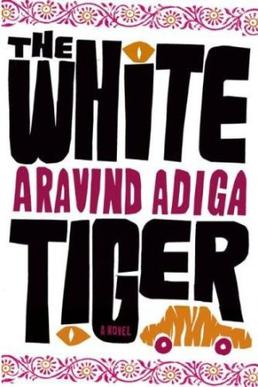


The White Tiger is the debut novel of Indian writer Aravind Adiga. It won him the Man Booker prize in 2008. The novel is written as a series of letters to the Chinese premier from the main character of the story, Balram Halwai. Balram’s story is set in modern India, amid the backdrop of globalization, and tells of his climb out of poverty to become a successful entrepreneur.

The contrast between the new India, a global economic power, and the life of rural poverty which is reality for the majority of Indians, is a major theme in this book. The book successfully portrays the India of reality and as such encompasses such themes as religious tension, familial loyalty and the difficult of returning to India after living abroad.

The story is of a climb out of poverty but it is no conventional rags-to-riches story. This is not the success story for which Balram will be invited to lecture on how he found his way out of poverty. Balram is not the hero who took only the good out of rural poverty and came out shining. He is witty and endearing but ultimately ruthless and willing to use any method to find financial independence.
Balram describes the poor in India as roosters in a cage. The roosters know that they will soon be killed but do not rebel. They make no attempt to escape. To him the poor in India are like the roosters, they have no fight left in them and they accept their fate. Balram decides that he will escape the cage renouncing established morals and values along the way.

The narrator finds himself out of rural India, when luck and his ability to take chances land him a chauffeur job in New Delhi. He works for the New York educated son of a landlord from his old village. This son at first seems to be the only character who cares about Balram but the progression of the story shows that he is just simpler weaker than the rest of his family.

Adiga’s plot may be slightly predictable and the final act which set Balram up to become a successful entrepreneur is one the reader may see coming. But it doesn’t really matter because this is one of the books where the setting and style overpowers the plot. There’s such a draw with the sarcastic and witty style of the narrator that the book is difficult to put down.

Arvind Adiga has managed to write a novel that is extremely funny but apparently without trying to be. Comparisons have been made to Richard Wright’s Native Son, another novel about living in poverty, and those comparisons have been made because they are true. While the two novels are nothing alike in writing style, they evoke a sense of familiarity between them. And when a novel can be continuously compared to a classic such as Native Son, there can be no higher praise.


Comments

Popular posts from this blog

Best Films of the Decade - 2010s - Third Part

11. Get Out (2017)-  Directed and written by  Jordan Peele. Horror seems to be an excellent medium to describe racism and it's somewhat amazing how obvious it seems in hindsight. One of the best debuts of a director in recent times, with a script that amps up the tension marvelously and serves up a twist in the tale that was impossible to see coming. Normally horror movies are seen as niche, but this film was popular with the wide audience and also at the award ceremonies further proving everyone was able to be captured by the film's quality. There has been talk of the film fitting into horror-comedy, probably due to Peele's comedy background, but while it is never laughably funny but does serve as a clever satire on the state of racial affairs. 12. The Death of Stalin (2017) - Directed by  Armando Iannuci.  Written by  Armando Iannuci, David Schneider and Ian Martin. Few topics are as ripe for satire as the workings of communist governments (provi...

Things I always Tell myself I will do After Exams End

I'm in the middle of exams and as always when I'm closer to the end than the start (one more week to go. finally) I always start thinking of what I'll do when exams are done. Like if there'll be this big change or new era that dawns when I have so much time free that I spend studying before exams. Usually never happens but I figured I'd list them. Maybe if they're visible and not mental I might stick to it more. 1. Sleep at a reasonable hour and for more than four hours a day 2. Eat proper meals at regular times with good nutrition 3. Following from 1&2, go gym regularly with no skipping days. Keep track of workouts. Try to progress. No cheats and slacking off or lazy days. 4. Read more 5. Write more 6. Try to figure out what I want to do, where I want to be in the next 5 years. Where to apply for postgrad research studies. What to apply to study. Do I want to study Creative Writing or Finance? 7. Practice playing guitar until I'm somewhat ...

Oscar Predictions-Film Awards (i)

Best Director Most likely winner :     Steven Spielberg   for Lincoln. Leaving out Ben Affleck, Kathryn Bigelow and Quentin Tarantino pretty much made this Spielberg's to lose. And doesn't reflect too well on the Academy either. Backup Pick :    David O. Russell for  Silver Linings Playbook. The production company of Weinstein have been campaigning hard for this and it's a good film with the acting performances set up well. The thing about best director is it's the easiest award to give to someone the academy likes because it's ambiguous and the academy doesn't really love Russell. Most deserving :      Michel Haneke for  Amour. Haneke has the most carefully crafted film here. All in all it is definitely his film in every scene. His presence is all around the film and it is an excellent film. If they give it for the greatest impact a director has on the film, this is it. Best Adapted Screenplay Most li...